Exploring the ocean through science, curiosity, and connection
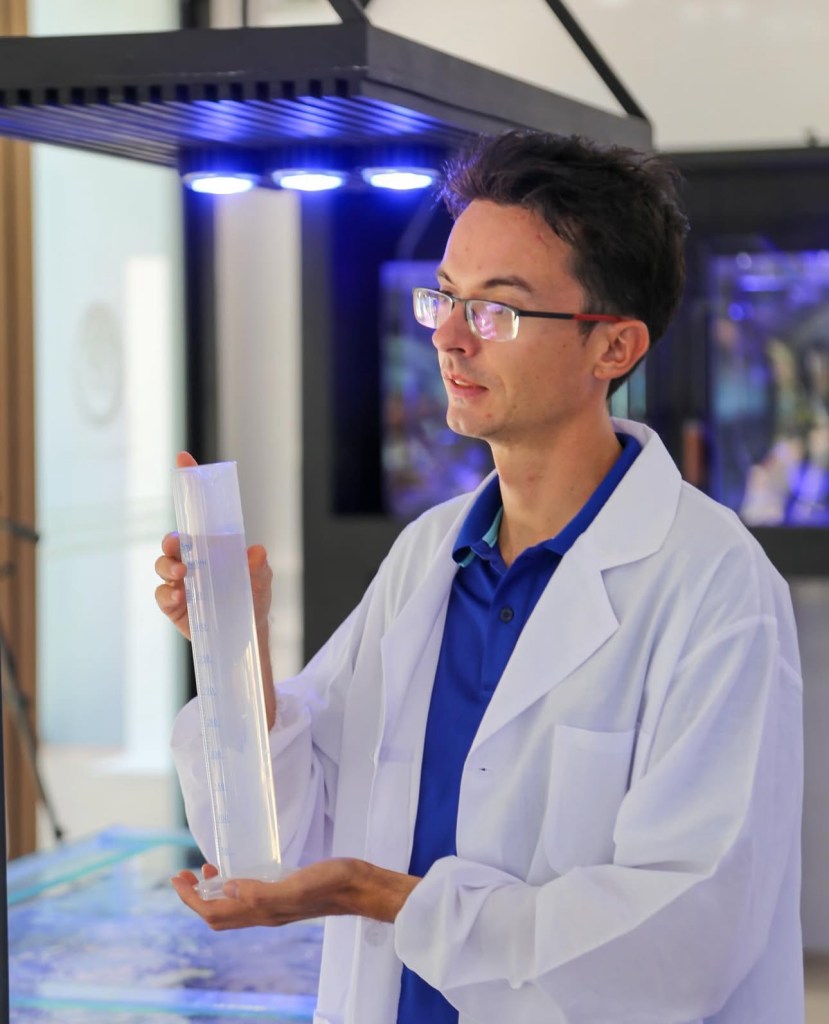
Marat Khaidarov has dedicated over 14 years to marine science, coral restoration, jellyfish culturing, and public education. From curating one of Russia’s largest aquariums to launching the Marine Biological Center at Hyatt Regency Phuket Resort, Marat’s passion lies in turning marine biology into meaningful guest experiences.
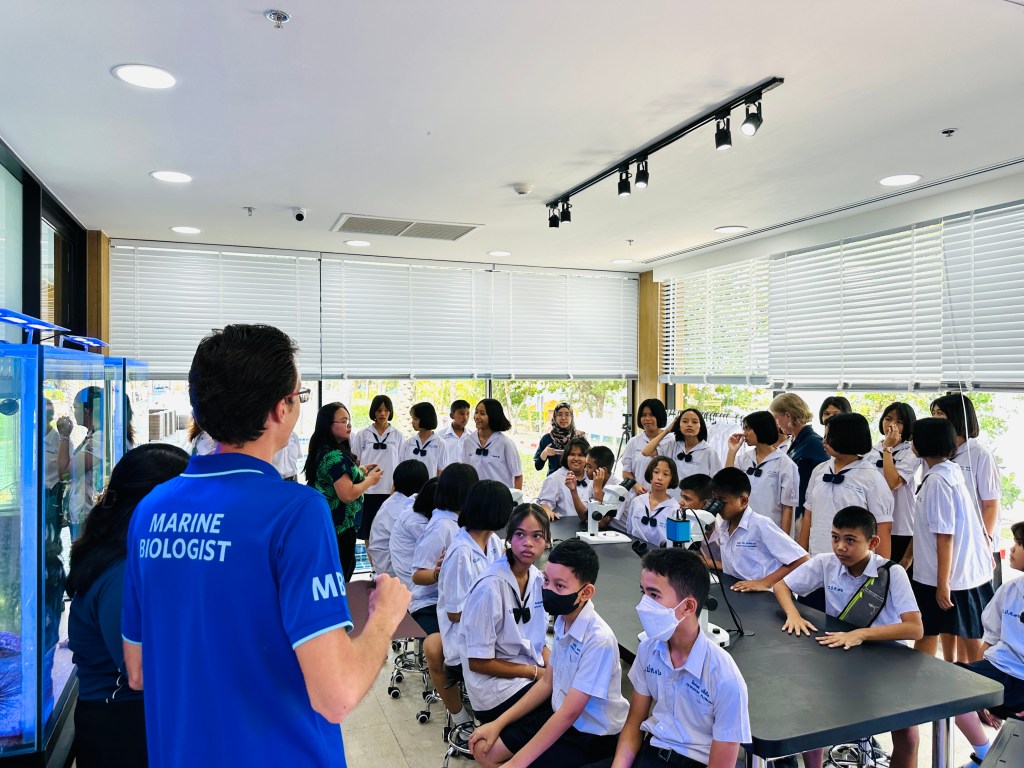
In this edition of 12 Questions, we explore how he brings ocean education to life — with curiosity, creativity, and care.
1. What first sparked your passion for marine life? Was there a moment that changed everything for you?
I’ve always been fascinated by the ocean, but the moment that truly changed everything was seeing my first coral reef while diving. The complexity and beauty of marine life made me realize how interconnected everything is, and I knew I wanted to dedicate my life to studying and protecting it.
2. From Russia’s largest public aquarium to a reef in Phuket — what inspired the shift?
Working in an aquarium was a fantastic way to learn about marine life, but I wanted to be closer to the real ocean, where conservation efforts have a direct impact. Moving to Phuket allowed me to work hands-on with coral reefs, educating guests while actively helping marine ecosystems.
3. What makes the Marine Biological Center at Hyatt so special to you?
The MBC is unique because it’s not just about research — it’s about engagement. Here, we bring marine science to life for people of all ages, making conservation personal and interactive. Seeing guests connect with the ocean in a meaningful way is incredibly rewarding.
4. You’ve created experiences like “The Mysterious Transformation” — how do you turn science into storytelling?
Science is full of amazing stories waiting to be told. Instead of just explaining the life cycle of jellyfish, I frame it as a mystery — how does something that starts as a tiny polyp become a drifting medusa? By adding curiosity and emotion, people remember and care about what they’ve learned.
5. What’s one marine creature you think is underrated — and why should we care more about it?
Sea cucumbers! They may not be the most charismatic creatures, but they play a crucial role in maintaining a healthy seabed by recycling nutrients. Without them, entire ecosystems could collapse.
6. Can you describe a time when a guest, especially a child, saw something under the microscope and it changed their perspective?
One child saw coral polyps feeding under the microscope and couldn’t believe corals were alive. That moment sparked a wave of questions and excitement — by the end, they wanted to be a marine biologist! Moments like that show how powerful hands-on experiences can be.
7. How do you balance education and entertainment when teaching about the ocean?
People learn best when they’re having fun. I mix storytelling, hands-on activities, and surprises to keep people engaged. The key is to make complex concepts feel simple, relevant, and exciting.
8. What’s your go-to way to explain coral bleaching or plastic pollution to someone hearing about it for the first time?
For coral bleaching, I compare corals to trees — if a forest suddenly lost all its leaves, it would struggle to survive. That’s what happens to corals when they lose their symbiotic algae. For plastic pollution, I show a plastic bag floating like a jellyfish in water — it instantly makes the issue clear.
9. If you had unlimited resources, what experience or project would you launch next at the MBC?
I’d create a fully immersive coral spawning lab where guests could witness the magic of coral reproduction. It would combine cutting-edge research with hands-on conservation experiences, helping restore reefs while inspiring future scientists.
10. What’s one myth about jellyfish or marine ecosystems that you love to bust?
That all jellyfish are dangerous! Many species are harmless, and some are even essential for the ocean’s balance. They’re one of the oldest living creatures on Earth, and studying them can teach us about climate change and ocean health.
11. You’ve been guiding guests and educating teams — what keeps you personally inspired every day?
Seeing the “aha” moments when people realize how incredible and fragile marine life is. Every day, someone discovers something new, and their excitement reminds me why I do this work.
12. And finally, what do you hope people remember most after visiting the Marine Biological Center?
I hope they leave with a deeper connection to the ocean. Whether it’s the first time they touched a sea star or the moment they saw a jellyfish pulse in the water, I want them to feel inspired to protect our blue planet.
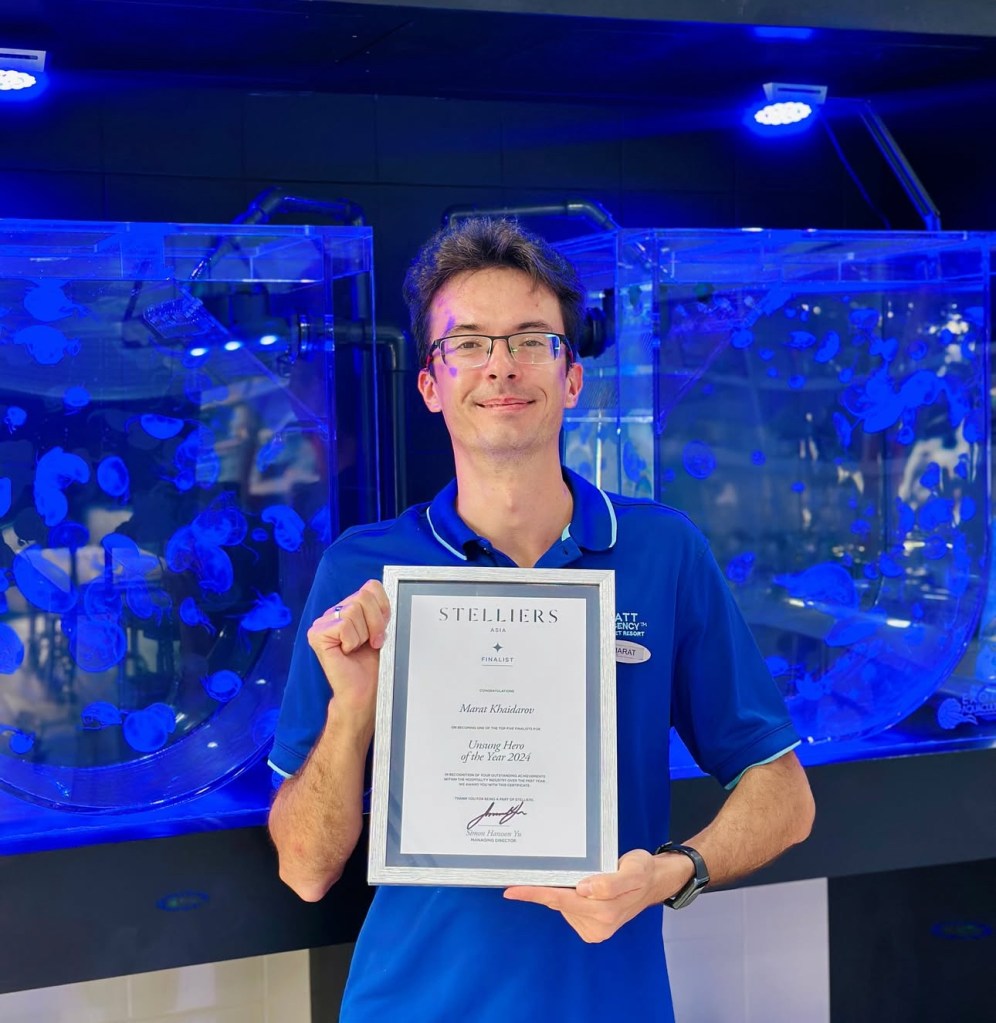
A Note of Recognition:
In 2024, Marat was honored as one of the Top 5 Finalists for the Unsung Hero of the Year at the Stelliers Asia Awards. This recognition reflects his tireless commitment to marine life, education, and sustainability — and the quiet impact he’s making every day through the Marine Biological Center.
“This journey is driven by passion,” Marat says, “and it’s for all of us working towards a better future for our oceans.”
Want to connect with Marat?

 Resort Experiences Global